The mask for lion dance I found in Kosetsu Market seemed happy
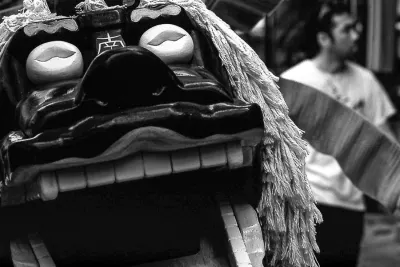
When I walked around the area near the market, I found a big mask placed by the wayside. It was used for Lion dance. I wondered why this mask was placed here. Most of the pedestrians walk past without even seeing.
It opened its mouth wide and its eyes were smiling. It seemed to be happy so much. During watching the mask, I became happy, too. So it was placed here to entertain the pedestrians. Fortune comes in at the merry gate.
| Oct 2007 OKINAWA STILL LIFE | |
| HAPPY LION LION DANCE MASK NAHA |
Similar photos
PHOTO DATA
No
1137
Shooting Date
Jul 2007
Posted On
October 12, 2007
Modified On
January 8, 2024
Place
Naha, Okinawa
Genre
Street Photography
Camera
CANON EOS 1V