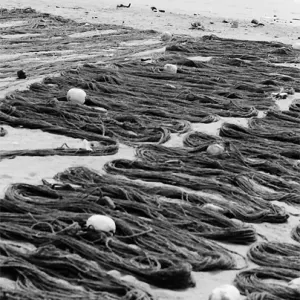
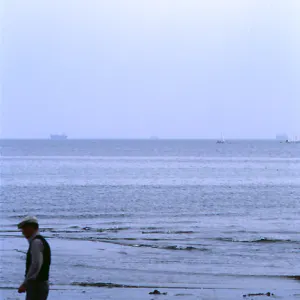
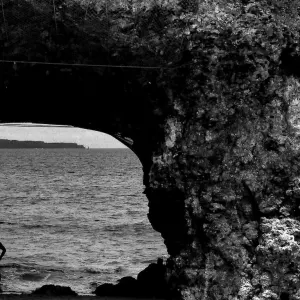
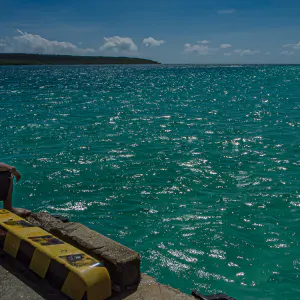
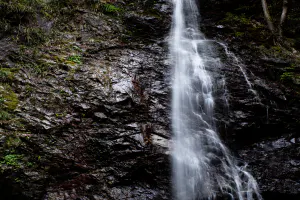
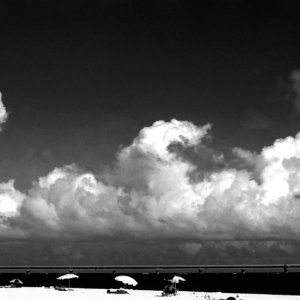
This photo of my photoalbum was taken in Okinawa.
The National Geographic Society, headquartered in Washington, D.C. in the United States, is one of the world's largest not-for-profit educational and scientific organizations. Its interests include geography, archaeology and natural science, the promotion of environmental and historical conservation, and the study of world culture and history. Its historical mission is "to increase and diffuse geographic knowledge while promoting the conservation of the world's cultural, historical, and natural resources."[1] Its President and CEO since March 1998, John M. Fahey, Jr., says National Geographic's purpose is to inspire people to care about their planet. The Society is governed by a twenty-three member Board of Trustees composed of a group of distinguished educators, businesspeople, scientists, former governmental officials, and conservationists. The organization sponsors and funds scientific research and exploration. The Society publishes an official journal, National Geographic Magazine, and other magazines, books, school products, maps, other publications, web and film products in numerous languages and countries around the world. It also has an educational foundation that gives grants to education organizations and individuals to enhance geography education.[2] Its Committee for Research and Exploration has given grants for scientific research for most of the Society's history and has recently awarded its 9,000th grant for scientific research, conducted worldwide and often reported on by its media properties. Its various media properties reach about 360 million people around the world monthly.[3] National Geographic maintains a museum free for the public in its Washington, D.C. headquarters, and has helped to sponsor such popular traveling exhibits such as the "King Tut" exhibit featuring magnificent artifacts from the tomb of the young Egyptian Pharaoh, and currently touring in several American cities, presently in Philadelphia at the Franklin Institute.
Ektachrome is a brand name owned by Kodak for a range of transparency still and motion picture films available in most formats, including 35 mm and sheet sizes to 11x14 inch size. Readers familiar with old National Geographic magazines will recall the distinctive look of Ektachrome, used for decades for color shots where-ever Kodachrome was too slow. Ektachrome, initially developed in the early 1940s, allowed professionals and amateurs alike to process their own films. It also made color reversal film more practical in larger formats, and the Kodachrome Professional film in sheet sizes was later discontinued. Ektachrome, unlike Kodachrome, was a product that small professional labs could afford equipment to develop. Many process variants (designated E-1 through E-6) were used to develop it over the years. Modern Ektachrome films are developed using the E-6 process, which can be carried out by small labs or by an amateur using a basic film tank and tempering bath to maintain the temperature at 100°F (38°C). Although the Ektachrome name was once associated with both amateur and professional films, Kodak, as of 2006, uses the Ektachrome brand for professional films. Consumer Kodak E-6 films are now branded Elite Chrome. Ektachrome film was used when shooting part of the 1999 film Three Kings and cross processed to give a unique appearance.