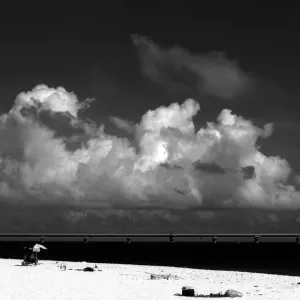
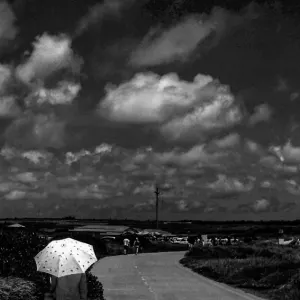
beach umbrella

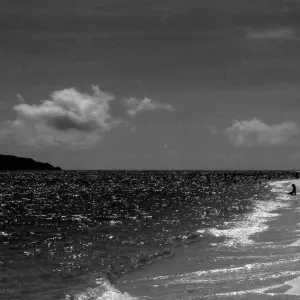
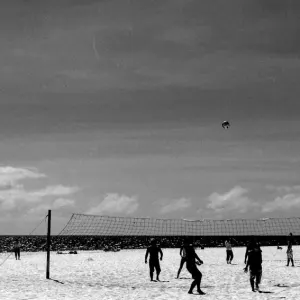
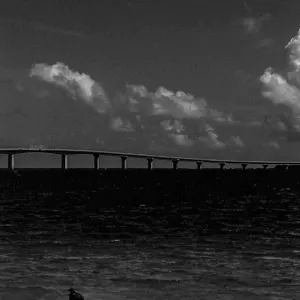
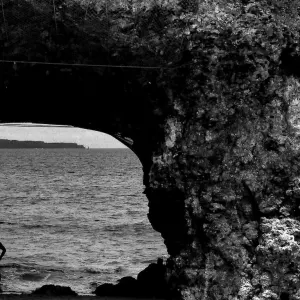
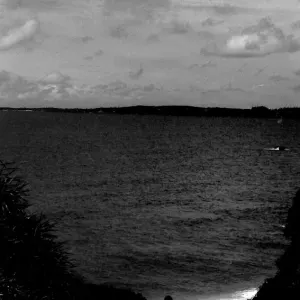
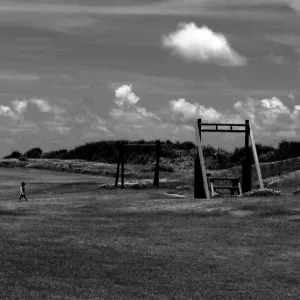
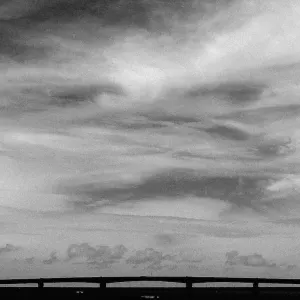
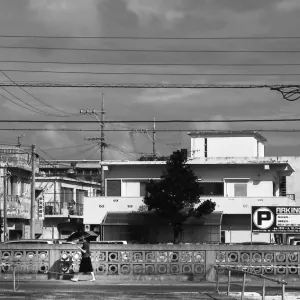
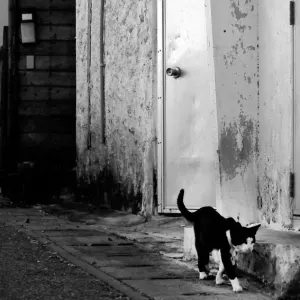
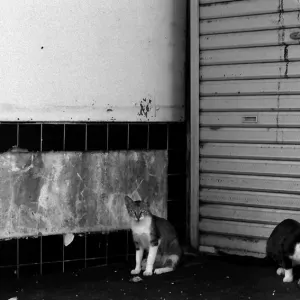
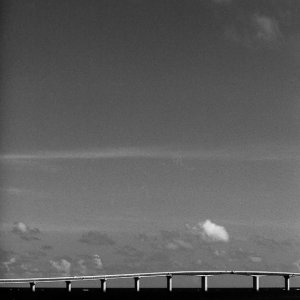
This photo of my photoalbum was taken in Okinawa.

Black-and-white is a broad adjectival term used to describe a number of monochrome forms of visual arts. Most forms of visual technology start out in black and white, then slowly evolve into color as technology progresses. "Black-and-white" as a description is also something of a misnomer, for in addition to black and white most of these media included varying shades of grey. Further, many prints, especially those produced earlier in the development of photography, were in sepia (mainly to provide archival stability), which gave a richer, more subtle shading than reproductions in plain black-and-white, although less so than color.

Tri-X is a classic high-speed black and white photographic film from Kodak. Introduced in 1954 at a rated speed of ASA 200/24° DIN, it was the first high-speed black and white film. Today it is available in two speeds, ISO 320/26° (320TXP) and 400/27° (400TX). Tri-X 400 is the more common of the two, coming in 24 and 36 exposure rolls of 35 mm and 120 as well as 50 and 100ft bulk rolls of 35mm. Tri-X 320 is available in 120 and 220, as well as 4×5", 5×7", and 8×10" sheets. Tri-X 400 is rated at ISO 400 when processed in standard developers and remains among the fastest black and white films today. Push processing Tri-X to EI 800 in a standard developer brings very good results, while further pushing to EI 1600 requires more sophisticated processing. Tri-x was once one of the most popular films used by photojournalists, but it declined in the 70's and 80's due to the falling price and increasing popularity of colour film. Since the advent of digital photography it has all but fallen out of use in newspaper journalism. Apart from possible use in educational establishments, it still remains reasonably popular in documentary journalism.

ブックマークに追加する
Bookmark and Share
random shots

stairs

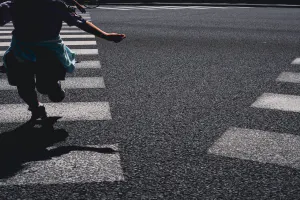
raise hand

代々木公園

walking under the castle


copyright © tetsu