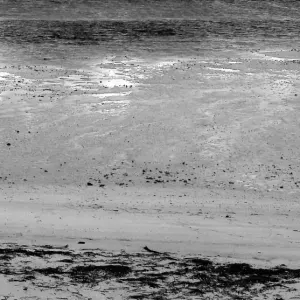
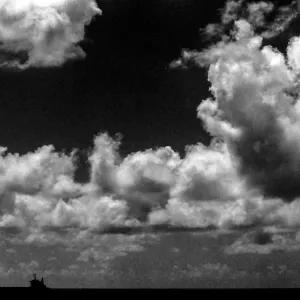
This photo of my photoalbum was taken in Okinawa.
Macro photography refers to close-up photography; the classical definition that the image projected on the "film plane" (i.e film or a digital sensor) is close to the same size as the subject. On 35 mm film (for example), the lens is typically optimized to focus sharply on a small area approaching the size of the film frame. Most 35mm format macro lenses achieve at least 1:2, that is to say, the image on the film is 1/2 the size of the object being photographed. Many 35mm macro lenses are 1:1, meaning the image on the film is the same size as the object being photographed. Another important distinction is that lenses designed for macro are usually at their sharpest at macro focus distances and are not quite as sharp at other focus distances. In recent years, the term macro has been used in marketing material to mean being able to focus on a subject close enough so that when a regular 4×6 inch (102×152 mm) print is made, the image is life-size or larger. This requires a magnification ratio of only approximately 1:4, more easily attainable by lens makers.
A photographic lens (also known as objective lens or photographic objective) is an optical lens or assembly of lenses used in conjunction with a camera body and mechanism to make images of objects either on photographic film or on other media capable of storing an image chemically or electronically. While in principle a simple convex lens will suffice, in practice a compound lens made up of a number of optical lens elements is required to correct (as much as possible) the many optical aberrations that arise. Some aberrations will be present in any lens system. It is the job of the lens designer to balance these out and produce a design that is suitable for photographic use and possibly mass production. There is no difference in principle between a lens used for a camera, a telescope, a microscope, or other apparatus, but the detailed design and construction are different. A lens may be permanently fixed to a camera, or it may be interchangeable with lenses of different focal lengths, apertures, and other properties.