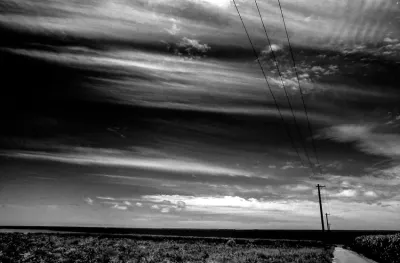
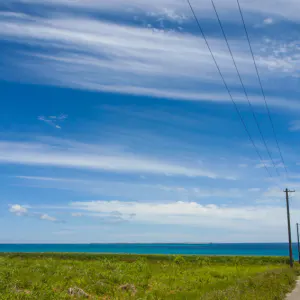
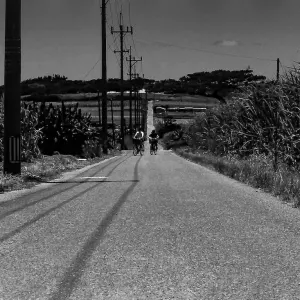
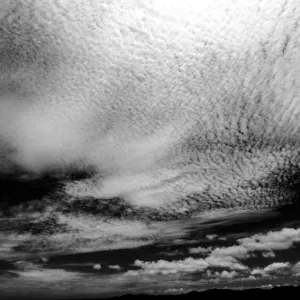
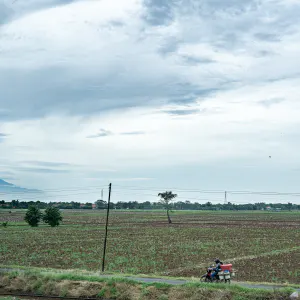
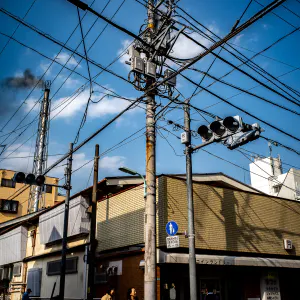
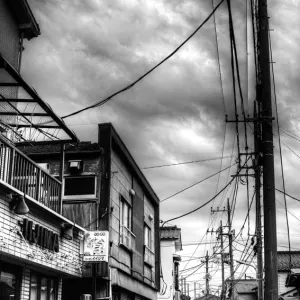
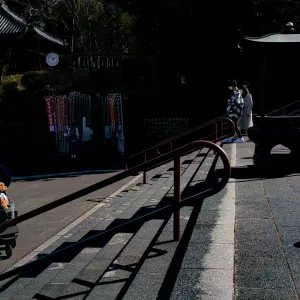
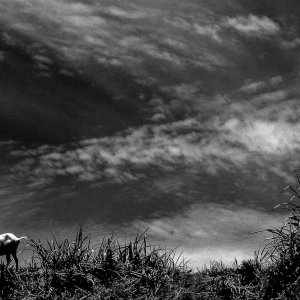
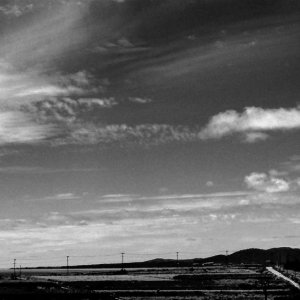
cloud and road

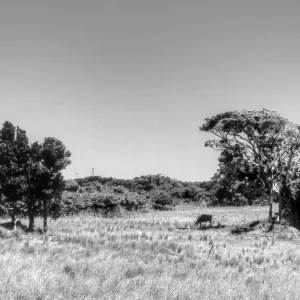
This photo of my photoalbum was taken in Okinawa.

Cosina Co., Ltd. (株式会社コシナ, Kabushiki-gaisha Koshina?) is a designer and manufacturer of cameras and lenses, and a glassmaker, based in Nakano, Nagano Prefecture, Japan. Cosina is the successor to Nikō (or "Nikoh"), a company set up as a manufacturer of lenses in 1959. In 1966, it started to manufacture 35 mm compact cameras and 8 mm cine cameras, in 1968 it started a glassworks, and a year later started the manufacture of 35 mm film SLR cameras. Nikō changed its name to Cosina in 1973. (The first part of the name is a reference to the Koshi area within Nakano, where the founder came from; while the 'Na' represents Nakano.) Although the name Cosina has previously appeared on compact and SLR cameras for 135 film, it is best known as a manufacturer of cameras and camera components for other brands. During the late 1970s, Cosina made a name for itself in 35 mm rangefinder cameras with a well-built, high quality fixed-lens camera using an aluminum body and a simple shutter-priority autoexposure system. This rangefinder camera was adopted as the basic chassis for several excellent camera models, including the Konica Auto S3, Minolta 7sII, Revue 400se, Prinz 35ER, and Vivitar 35ES. Cosina is also well known for manufacturing 35 mm SLR cameras to the specifications of other manufacturers and distributors, such as the Yashica FX-3 (1979), FX-3 Super, and Super 2000, the Nikon FM-10 and FE-10, the Olympus OM-2000, and various Vivitar models. A Cosina design, the 1982 Cosina CX-2, was copied by the Russian optical firm LOMO as the popular Lomo LC-A. In 1982 Cosina began to manufacture lenses in a variety of SLR manufacturers' lens mounts. In 1991 it started to produce glass molded aspheric lenses, and in 1996 plastic molded aspherical lenses. It began producing digital cameras in 1997. At about this time, plans were started to produce a new 35 mm rangefinder camera, complete with wide and ultrawide lenses for the Leica screw mount, and also a basic camera -- similar to a rangefinder camera but without a rangefinder or viewfinder -- for mounting these. Having obtained the rights to the name Voigtländer from Ringfoto in Germany, Cosina introduced a Voigtländer 15 mm f/4.5 and 25 mm f/4 lens (neither of them rangefinder-coupled) and the Voigtländer Bessa L body in 1999. It quickly followed with a wider range of cameras (starting with the Bessa R, with viewfinder and rangefinder; and the Bessa T, with rangefinder but no viewfinder); and a set of lenses including the Heliar 12 mm f/5.6 lens, which on its introduction was the widest rectilinear lens ever marketed for still photography. The Voigtländer cameras and lenses have been of great personal interest to Kobayashi Hirofumi 小林博文 (b.1953), the President of Cosina since the death in 1988 of his father (小林文治郎), the founder. The name Cosina now appears (conspicuously) on lenses for various SLR mounts, and less conspicuously on a widening range of cameras and lenses with the Voigtländer brand. Cosina manufacturesd a Rollei-branded rangefinder camera, and is acknowledged to manufacture (and to have helped design) an Epson digital rangefinder camera as well. Its manufacture of a new Zeiss Ikon Leica bayonet mount rangefinder camera and Zeiss lenses in Leica bayonet mount was announced in October 2004, and it is already (April 2006) producing these. Cosina made again a jump into notoriety in the photography world by manufacturing for Zeiss their six new ZF lenses for Nikon mount. ZF is a new range of interchangeable lenses for Nikon SLR cameras, both analog and digital. ZF lenses bring the highly acclaimed Carl Zeiss image quality to the Nikon SLR camera system, which has been the preferred equipment of millions of professional and ambitious amateur photographers for decades. Cosina products are distributed in Japan by Kenko.

The Plaubel Makina was a series of medium format press cameras manufactured by Plaubel & Co. in Germany from 1912 through 1953, and later a Japanese-made camera distributed by Doi from 1978 through the 1980s. All Makina models had leaf shutters and rangefinder focusing with collapsible bellows. German-made Plaubel Makina models included the 1, 2, 2s, 3, and 3R. The Japanese-made Plaubel Makina was a major redesign with Nikkor lenses and integrated metering. Models 67 and 670 had Nikkor 80mm f/2.8 lenses, while the wide-angle models 67W and 670W used Nikkor 55mm f/4.5 lenses. All four models take ten 6x7cm exposures on 120 rollfilm.

ブックマークに追加する
Bookmark and Share

copyright © tetsu