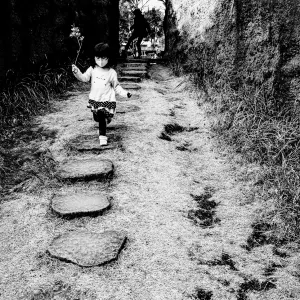
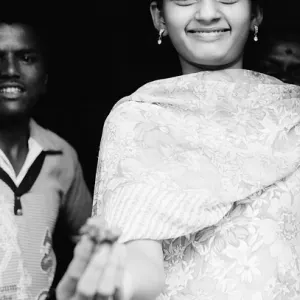
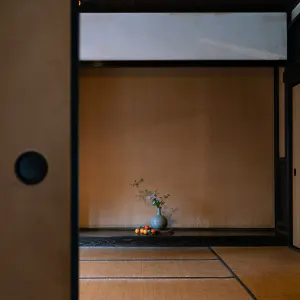
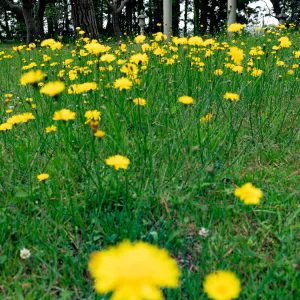
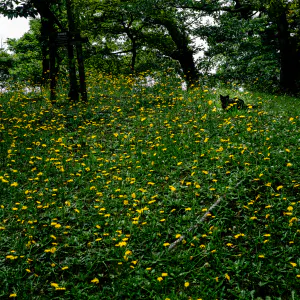
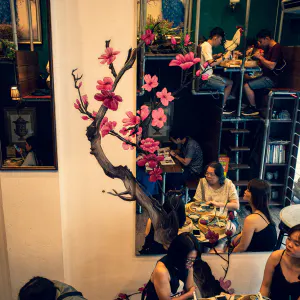
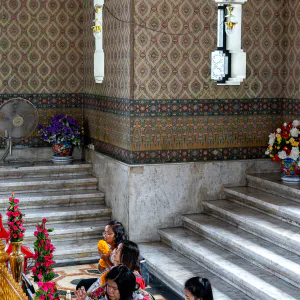
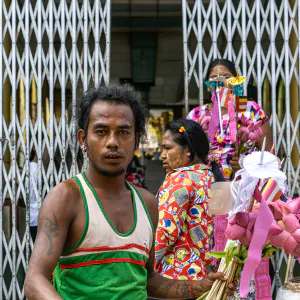
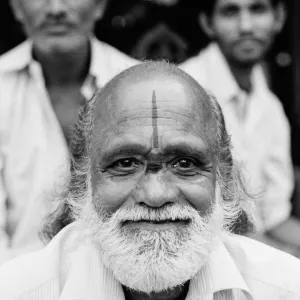
This photo of my photoalbum was taken in Shibuya of Tokyo.
Ihei Kimura (木村伊兵衛, Kimura Ihei) is one of the most celebrated Japanese photographers of the twentieth century, particularly known for his portrayal of Tokyo and Akita. Born on 12 December 1901 in Shitaya-ku (now Taitō-ku), Tokyo, Kimura started taking photographs when very young but his interest intensified when he was around 20 and living in Tainan (Taiwan), where he was working for a sugar wholesaler. He opened a photographic studio in Nippori, Tokyo in 1924. In 1930, he joined the advertising section of the soap and cosmetics company Kaō, concentrating on informal photographs made with his Leica camera. In 1933, he joined Yōnosuke Natori and others in forming the group Nippon Kōbō ("Japan workshop"), which emphasized "realism" in photography using 35mm cameras; but this rapidly broke up and Kimura formed an alternative group, Chūō Kōbō ("central workshop") with Nobuo Ina and others. During the war, Kimura worked in Manchuria and for the publisher Tōhō-sha. In 1950, Kimura was elected chairman of the newly formed Japan Professional Photographers Society (JPS); together with Ken Domon he did much to encourage a documentary spirit in amateur photography. In the mid-fifties, Kimura made several trips to Europe, providing photographs for the camera magazines. Pari,[1] a collection of his color photographs of Paris, would only be published in 1974, but the use of color was ahead of its time. On his return to Japan, Kimura concentrated on photographing rural life in Akita. He also worked on portraits, particularly of writers. Kimura died at his home in Nippori on 31 May 1974; the Kimura Ihei Award for new photographers was promptly set up in his honor. He remains popular in Japan: samples of his photographs still (2007) regularly appear in the magazine
Since the introduction of the original Lomo LC-A, Lomography has produced and marketed an entire line of their own branded analog cameras. Most Lomographic cameras are designed to produce a single photographic effect. For example, the Lomography Fisheye camera features a built-in wideangle lens, and shoots fisheye-distorted photos. In 2005, production of the original Lomo LC-A was discontinued. Its replacement, the LC-A+, was introduced in Fall 2006. The new camera is made in China rather than Russia, but still features the original Russian lens - which is actively manufactured by LOMO PLC. Similar to Eastman Kodak's concept of the "Kodak moment," the Lomography motto of "don't think, just shoot" presumes spontaneity, close-ups, and ubiquity, while deemphasizing formal technique (however to take a good 'from the hip' shot does take skill). Typical lomography cameras are deliberately low-fidelity and inexpensively constructed. Some cameras make use of multiple lenses and rainbow-colored flashes, or exhibit extreme optical distortions and even light leaks. Current models marketed by Lomographische AG include Lomo LC-A, Holga, Holga 35mm, Actionsampler, Frogeye, Pop-9, Oktomat, Fisheye, Fisheye2, Colorsplash, Colorsplash Flash, F-stop Bang, SuperSampler, Horizon 202, Seagull TLR, and Smena 8M. The company also resells deadstock Polaroid cameras and Russian dead stock—the sort normally acquired at "quirky, old-school camera shops," as the company's web site puts it.
Lomography is the commercial trademark of Lomographische AG, Austria for products and services related to photography. The name is inspired by the former state-run optics manufacturer LOMO PLC of St. Petersburg, Russia. LOMO PLC created and produced the 35 mm LOMO LC-A Compact Automat camera - which became the centerpiece of Lomography's marketing and sales activities. This camera was loosely based upon the Cosina CX-1 and introduced in the early 80's.
In 1991, the Austrian founders of Lomography "discovered" the Lomo LC-A while on holiday in Prague (bought a second hand one for ~US$8). As the company states, they were "charmed by the unique, colorful, and sometimes blurry" images that the camera produced. After a series of international art exhibitions and aggressive marketing work, Lomography signed an exclusive distribution agreement with LOMO PLC - thereby becoming the sole distributor of all Lomo LC-A cameras outside of the Soviet Union. This monopolistic agreement, their viral/tribal marketing strategies and pricing philosophy have generated controversy. Lomography emphasizes casual, snapshot photography. Characteristics such as over-saturated colors, off-kilter exposure, blurring, "happy accidents," and alternative film processing are often considered part of the "Lomographic Technique." Users are encouraged to take a lighthearted approach to their photography, and use these technique to document everyday life, as the Lomo LC-A's small size, simple controls, and ability to shoot in low light encourages candid photography, photo reportage, and photo vérité.
Gianni Versace (December 2, 1946 – July 15, 1997) was an accomplished Italian designer of both clothing and theater costumes. He was influenced by Andy Warhol, Ancient Roman and Greek art as well as modern abstract art; he is considered one of the most colorful and talented designers of the late 20th century.